


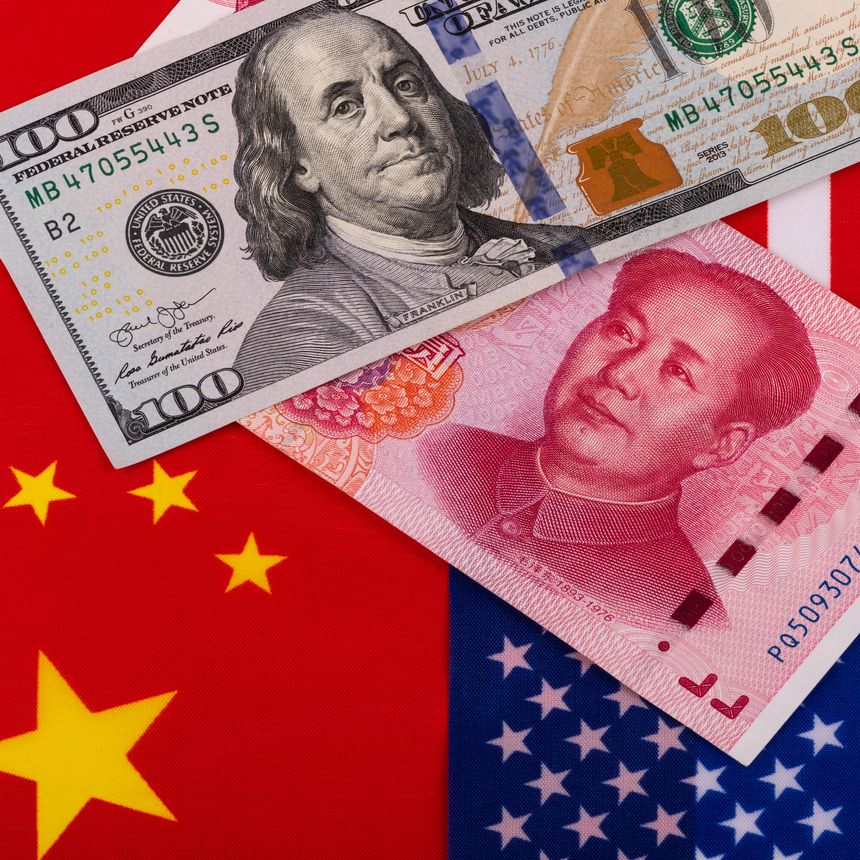
The Biden Administration has issued its anticipated Executive Order on outbound foreign investment from the United States; and artificial intelligence is one of the critical technologies squarely in the government’s cross hairs. While the exact extent to which U.S. investment overseas may be regulated or restricted will be decided by the Treasury Department through a rulemaking process, the clear focus of this new Executive Order is on the artificial intelligence, semiconductors, and quantum information technologies sectors in China.
The Executive Order of August 9, “Addressing United States Investments in Certain National Security Technologies and Products in Countries of Concern” (the “E.O.”), does not immediately impose new restrictions on outbound investment (Click Here to View E.O.). Rather, it directs the Treasury Department — in consultation with the Commerce Department and other agencies — to develop a program to prohibit or require notification concerning investments by U.S. persons in “the semiconductors and microelectronics, quantum information technologies, and artificial intelligence sectors that are critical for the military, intelligence, surveillance, or cyber-enabled capabilities of a country of concern [i.e., China, Hong Kong and Macau].”
Simultaneous with issuance of the E.O., the Treasury Department has issued a 48-page Advance Notice of Proposed Rulemaking (“ANPRM”) in order to present the intended scope of the program and to solicit input from interested persons on the implementation of the E.O. and the rulemaking process before the program goes into effect.
In its ANPRM, the Treasury Department specifically addresses AI systems, for which it “is considering a notification requirement for transactions related to certain technologies and products with specific end uses and is considering a prohibition in certain other cases, particularly as these uses may involve Chinese military and intelligence capabilities.” The Treasury Department is also considering how to shape a prohibition on U.S. investment in Chinese entities engaged in a narrow set of activities related to software that incorporates an AI system and is designed for particular end uses with national security implications, e.g., military surveillance. The types of investment transactions that could be captured under this program include “acquisitions of equity interests (e.g., mergers and acquisitions, private equity, and venture capital), greenfield, joint ventures, and certain debt financing transactions by United States persons.”
The Treasury Department will be opening a 45-day comment period on the proposed program when interested persons will have the opportunity to file comments in response to the 83 questions Treasury has raised in its ANPRM. Twenty of these questions directly inquire about AI systems and how they should be dealt with in the program.
Given the timing of the comment period and the depth and breadth of the questions asked by the Treasury Department, it is likely that the new rules for the program called for under the E.O. will not be issued and effective until next year.
/Passle/678abaae4818a4de3a652a62/SearchServiceImages/2026-08-12-21-32-53-009-6a7ce685041f696e4cb27312.jpg)
/Passle/678abaae4818a4de3a652a62/SearchServiceImages/2026-09-24-16-08-28-399-6ab54afc480f2289e9a3c3e1.jpg)

/Passle/678abaae4818a4de3a652a62/SearchServiceImages/2026-08-31-02-23-38-311-6a94e5aa7f78a11931bf47f1.jpg)