


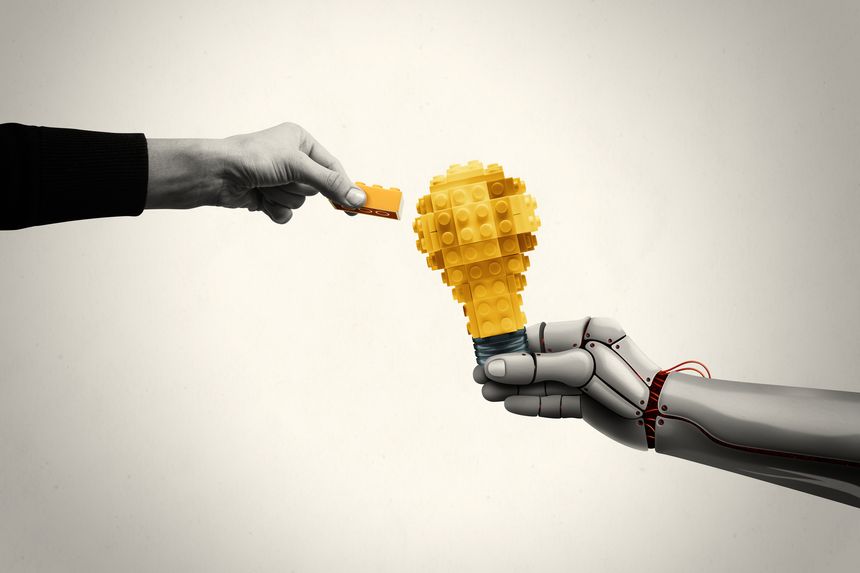
The U.S. Patent and Trademark Office has issued revised examination guidance on inventorship for AI-assisted inventions, rescinding its February 2024 guidance and replacing it with a clarified legal framework. The central message is unequivocal: only natural persons can be named as inventors on U.S. patent applications and patents, regardless of whether artificial intelligence was used in the inventive process. The USPTO characterizes AI systems—whether generative or otherwise—as tools employed by human inventors, akin to laboratory equipment, software, or research databases. This approach, consistent with how the USPTO ultimately treated the use of computers in the patenting process, recognizing AI as a tool to be used for inventing, but incapable of invention in and of itself.
What Changed from the 2024 Guidance
The USPTO has expressly withdrawn the 2024 guidance and its reliance on the so-called Pannu factors (named after the case which put forth these factors explicitly, Pannu v. Iolab Corp., 155 F.3d 1344 (Fed. Cir. 1998)) as a general test in AI contexts. The Office now states that the traditional inventorship standard applies across the board, without any modified or parallel test for AI-assisted inventions. Conception remains the touchstone: the inventor must have formed in their mind a definite and permanent idea of the complete and operative invention, such that only ordinary skill would be needed to reduce it to practice. Where a single natural person used AI in the inventive process, the analysis focuses solely on whether that individual conceived the claimed invention under this traditional conception standard. Where multiple natural persons contributed, conventional joint inventorship principles apply, including the Pannu factors, but only to evaluate the natural human contributors.
The guidance squarely affirms the Federal Circuit’s holding that only natural persons can be inventors, reiterating that AI systems cannot be named as inventors or joint inventors and that any application listing an AI system or other non-natural person must be rejected under the applicable statutory provisions. The Office’s position aligns with controlling precedent and treats AI contributions as assistance to human inventors, not as inventors in their own right.
Utility, Design, and Plant Patents
The Office confirms that the same inventorship standard applies to utility, design, and plant patents. For design patents, inventorship is assessed under the same principles that govern utility patents. For plant patents, the inventor must contribute to the creation of the plant, not merely appreciate and asexually reproduce a discovered variety; this requirement remains unchanged when AI tools assist in plant development.
Priority and Foreign Filings Involving AI Inventors
The guidance also specifically addresses priority claims where a prior application—U.S. or foreign—names a non-natural person as an inventor. U.S. applications and patents claiming benefit or priority must name the same inventor or share at least one joint inventor in common, and that inventor must be a natural person. A U.S. priority claim will not be accepted if the prior application names an AI tool as the sole inventor . If a foreign application lists both a natural person and a non-natural person as joint inventors, the U.S. application should identify only the natural person(s) as inventor(s), including at least one inventor in common to support the benefit or priority claim. The same approach applies to PCT national stage entries where the international phase indicated a non-natural person as a joint inventor.
Considering most foreign countries' current approaches to AI inventorship (at least in the patent context) this is likely to be only a relatively minor issue - since most foreign offices do not accept AI as an inventor, it is unlikely to come up in regular practice very often. But for those jurisdictions that do (or perhaps in the future will) allow for AI to be a named inventor on a patent application, practitioners should be aware of this requirement when proceeding in the United States as it may require a more fulsome inventorship determination and amendment to the application itself.
Does This Alter Current Court Precedent?
No. The guidance does not alter, expand, or contract current precedent on inventorship. It reaffirms the Federal Circuit’s rule that only natural persons can be inventors and positions AI systems solely as tools used by human inventors. The principal change is at the USPTO policy level: the Office withdraws the 2024 approach and clarifies that there is no special, AI-specific inventorship standard. Traditional conception doctrine governs, and joint inventorship analyses (including Pannu) apply only among the human contributors.
Bottom Line
The USPTO’s revised guidance tightens alignment with existing law and clarifies examination practice for AI-assisted inventions. Applicants should continue to name only natural persons as inventors, ensure that at least one human conceived each claimed limitation, and structure claim strategies and priority chains accordingly—particularly where foreign filings may have identified non-human inventors. The Office’s stance underscores that, however sophisticated the tool, inventorship in the United States remains a human endeavor.
/Passle/678abaae4818a4de3a652a62/SearchServiceImages/2026-08-12-21-32-53-009-6a7ce685041f696e4cb27312.jpg)
/Passle/678abaae4818a4de3a652a62/SearchServiceImages/2026-09-24-16-08-28-399-6ab54afc480f2289e9a3c3e1.jpg)

/Passle/678abaae4818a4de3a652a62/SearchServiceImages/2026-08-31-02-23-38-311-6a94e5aa7f78a11931bf47f1.jpg)