


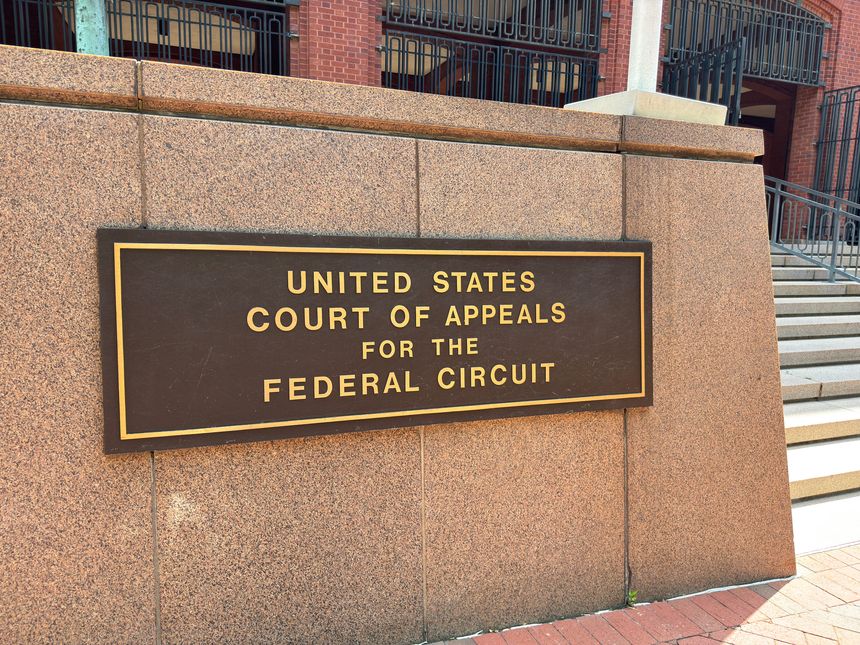
In a short but precedential opinion, the U.S. Court of Appeals for the Federal Circuit affirmed the invalidation of certain asserted claims of U.S. Patent No. 10,912,321 (the “'321 Patent”). The underlying decision by the U.S. District Court for the Eastern District of Arkansas found the asserted claims to be invalid as indefinite under 35 U.S.C. § 112(b), in part, for use of the term “about” in the claims. The decision, authored by Judge Lourie and joined by Judge Prost and Judge Burroughs (sitting by designation), is a pointed reminder that words of approximation such as “about” (and even “approximate”) can render otherwise valuable claims invalid when the record fails to fix their scope. The case is Enviro Tech Chem. Servs. v. Safe Foods Corp., Case No. 24-2160 (Fed. Cir. 2026). Though the law with respect to definiteness remains unchanged, the Federal Circuit's decision here may provide helpful guiderails as to when and how certain words of approximation may be used within claims.
Background
The ‘321 patent claims methods of treating poultry carcasses with peracetic acid, including a step of adjusting the pH of a peracetic acid solution to “about 7.6 to about 10” by adding an alkaline source. Enviro Tech sued Safe Foods for infringement, and during claim construction Safe Foods challenged both the term “an antimicrobial amount” and the term “about” as indefinite. The district court agreed on both grounds and entered judgment of invalidity. Enviro Tech appealed to the Federal Circuit.
Federal Circuit Opinion
Reviewing indefiniteness de novo, the Federal Circuit addressed only the use of the term “about” which invalidated each of the asserted claims and the Court did not reach any other arguments made by the parties. The Court reiterated its long-standing rule that terms of degree such as “about” and “approximately” are not inherently indefinite and may properly be used to avoid a strict numerical boundary, but only where the parameter’s range is reasonably certain in light of the “technological facts of the particular case”. This “range” in turn is informed by the intrinsic record of the patent, including the specification and, of particular note in this case, the prosecution history. Though the extrinsic record may (in often times should) be utilized in ascertaining the scope of a particular word of approximation, here, the Court's analysis was limited to the intrinsic patent record.
Applying Nautilus, the panel found the intrinsic record of the '321 Patent wanting at several levels. According to the Court, the claim language itself offered no specific guidance on permissible deviation above pH 10 or below pH 7.6, and the parties agreed construction that “about” meant “approximately” did nothing to remedy this issue, since “approximate” did not further clarify the claimed range. Looking to the specification, the Court also found it inconsistent: while many examples treated deviations of 0.3 pH as the working tolerance, other examples—including the largest disclosed commercial trial which involved approximate 5.8 million test subjects—proceeded with deviations of 0.35 to 0.5, undermining any argument that 0.3 was a firm bound on the acceptable range.
The Court's review of the prosecution history also did not remedy the issue: during prosecution Enviro Tech used “about” inconsistently across office action responses and never specifically explained what the term meant—in some instances failing to address the term entirely. The Court also rejected Enviro Tech’s argument that amending the lower bound from “about 7.3” to “about 7.6” implicitly disclaimed deviations greater than 0.3, noting the absence of “repeated and consistent remarks” or explanatory amendments tying “about” to that range.
A final decisive factor was the proximity of the prior art, highlighting a need for precision when a claim is narrowed to traverse specific disclosures in the art. During prosecution, according to the Court, asserted claim 1 was amended specifically to avoid a particular prior art reference which disclosed the use of a pH of 7.0. Given this specific disclosure in the prior art, the court held that the “definiteness requirement of § 112 necessitates much more clarity than using the vague term ‘about.’” Since the specification of the '321 Patent disclosed a specific range of "pHs of 6-10," which would in part fall within the cited prior art, the Court found that, in this scenario, the claims needed to claim more than just an approximate range (using the term “about” as they did here), but something with greater clarity.
/Passle/678abaae4818a4de3a652a62/SearchServiceImages/2026-08-12-21-32-53-009-6a7ce685041f696e4cb27312.jpg)

/Passle/678abaae4818a4de3a652a62/SearchServiceImages/2026-08-31-02-23-38-311-6a94e5aa7f78a11931bf47f1.jpg)
/Passle/678abaae4818a4de3a652a62/SearchServiceImages/2026-08-26-18-37-55-364-6a8f3283c72b005d21f9bafe.jpg)