


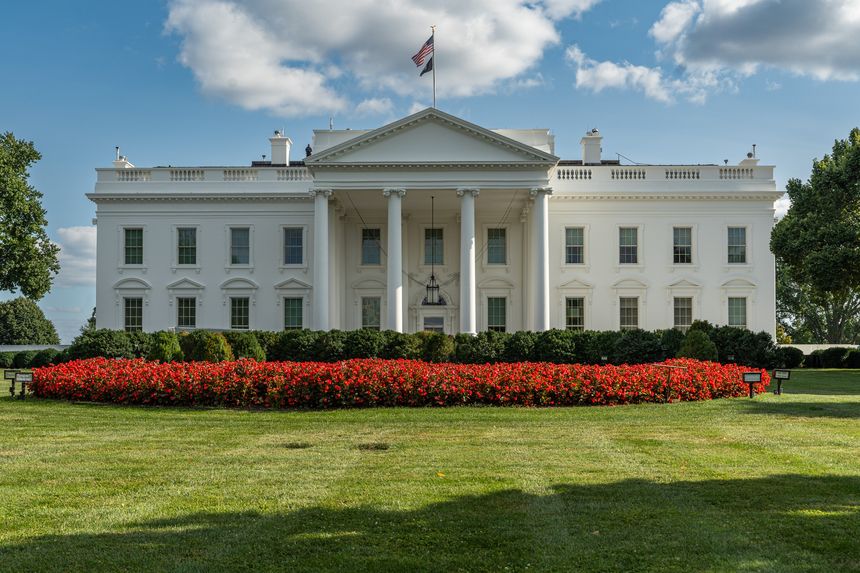

During Baker Botts' 39th Annual Environmental, Safety & Incident Response Seminar on January 28, 2026, Partner Jeff Wood led a session with Justin Schwab, General Counsel at the White House Council on Environmental Quality, titled “NEPA Reform & Energy Dominance: A View from White House CEQ’s Top Lawyer.”
Key Takeaways
- NEPA implementation is being realigned around current Administration priorities. Federal environmental review policy is being proposed to support faster decision making, particularly for infrastructure and energy projects. A core focus is ensuring that when funding, staffing, and project readiness align, environmental reviews do not become a bottleneck. Agencies are being encouraged to use existing statutory tools to move reviews forward more efficiently.
- Statutory limits are reshaping the pace and scope of review. Recent amendments to NEPA established page and time limits for environmental assessments and environmental impact statements, reinforcing that the process is intended to be bounded and predictable. These changes are driving agencies to narrow analyses, focus on impacts related to the project at hand, and complete reviews on clearer timelines. For project sponsors, this creates stronger grounds to push for disciplined schedules and right sized documentation.
- Categorical exclusions are becoming a more powerful tool. Agencies are increasingly adopting each other’s categorical exclusions, and new technology platforms are making those exclusions easier to identify and apply. The Categorical Exclusion Explorer, an interactive governmentwide database, is designed to help agencies and applicants quickly determine whether a proposed action may qualify for a streamlined path that avoids lengthy NEPA reviews.
- FAST-41 and interagency coordination remain important but targeted. The federal permitting dashboard and FAST-41 framework can provide added structure and transparency for certain large, complex projects, but they are not a universal solution. Early engagement with the Federal Permitting Improvement Steering Council and related offices can help determine whether a project is a good candidate for that process and how best to sequence reviews across agencies.
In this session, we discussed how federal environmental review is entering a period of procedural tightening and modernization. Policymakers are emphasizing that NEPA is a process statute with defined limits, not an open-ended policy exercise. New statutory page and timeline caps are pushing agencies toward more focused analyses and more predictable schedules, while also giving project sponsors clearer expectations for how long reviews should take. At the same time, federal leadership is working to ensure that internal policies and guidance are in place so that when projects are ready to move, NEPA review does not unnecessarily delay investment in infrastructure and energy development.
Technology and coordination tools are also evolving. Shared categorical exclusions and new digital resources are making it easier to identify opportunities for streamlined reviews, and the FAST-41 framework continues to offer a structured pathway for certain high-profile projects. However, these tools work best when considered early in project planning. For companies navigating federal approvals, the most effective approach will combine strong technical documentation with a forward-looking permitting strategy that leverages categorical exclusions where available, sets realistic schedules based on statutory limits, and engages the right federal coordination mechanisms from the outset.
/Passle/678abaae4818a4de3a652a62/SearchServiceImages/2026-08-12-21-32-53-009-6a7ce685041f696e4cb27312.jpg)
/Passle/678abaae4818a4de3a652a62/SearchServiceImages/2026-09-24-16-08-28-399-6ab54afc480f2289e9a3c3e1.jpg)

/Passle/678abaae4818a4de3a652a62/SearchServiceImages/2026-08-31-02-23-38-311-6a94e5aa7f78a11931bf47f1.jpg)